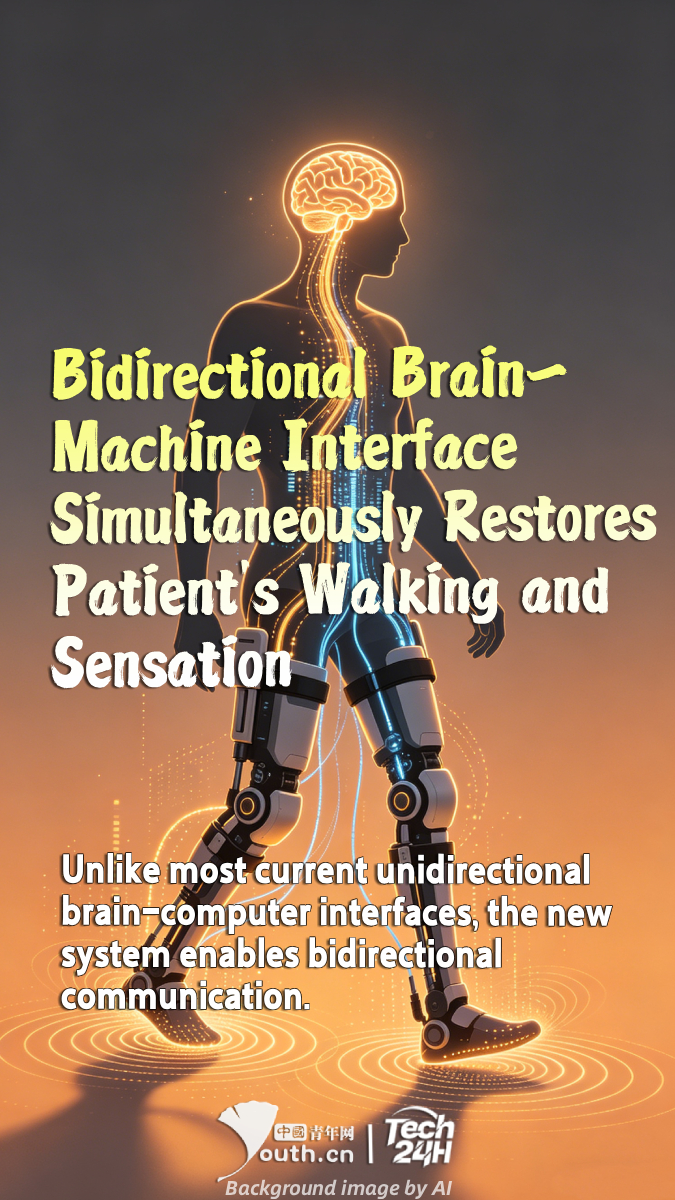
A “bidirectional brain-machine interface system” developed by research teams from Keck School of Medicine of USC, the University of California, Irvine, and the California Institute of Technology has completed full testing on a patient, achieving an impressive 92% accuracy in both control and perception, offering new hope for treating paraplegia in the future. Unlike most current unidirectional brain-computer interfaces, the new system enables bidirectional communication: it not only decodes signals from the patient’s motor cortex to control a wearable robotic exoskeleton for walking, but also stimulates the sensory cortex to provide real-time simulated walking sensations, forming a complete perception-control closed loop. This achievement is considered an important step toward future fully implantable systems.