
The Paralyzed Patient Can "Mind-Control" the Wheelchair
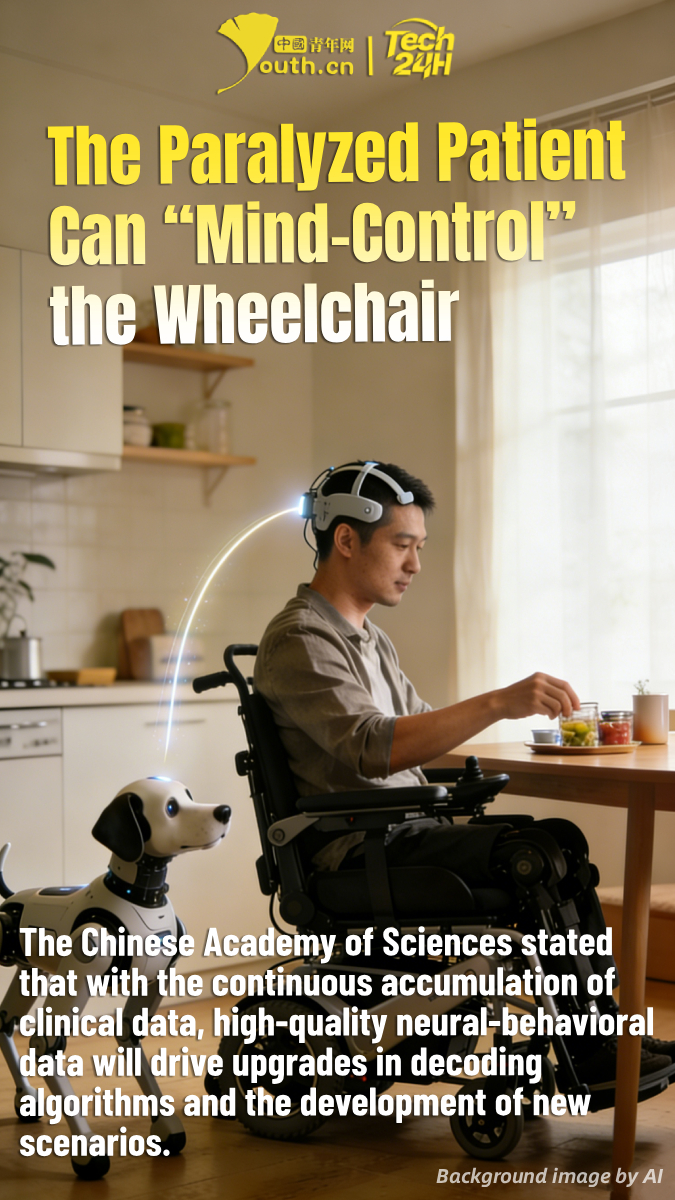
【#Tech24H】Recently, the Chinese Academy of Sciences successfully completed the second clinical trial of an invasive brain-computer interface. The research team used a high-throughput wireless invasive brain-computer interface system (WRS01) to enable a quadriplegic patient to stably control an intelligent wheelchair and a robotic dog through brain signals, achieving autonomous movement and object retrieval in real-life scenarios. The Chinese Academy of Sciences stated that with the continuous accumulation of clinical data, high-quality neural-behavioral data will drive upgrades in decoding algorithms and the development of new scenarios, forming a virtuous cycle of “data-innovation” mutual enhancement.
Editor:ZLY