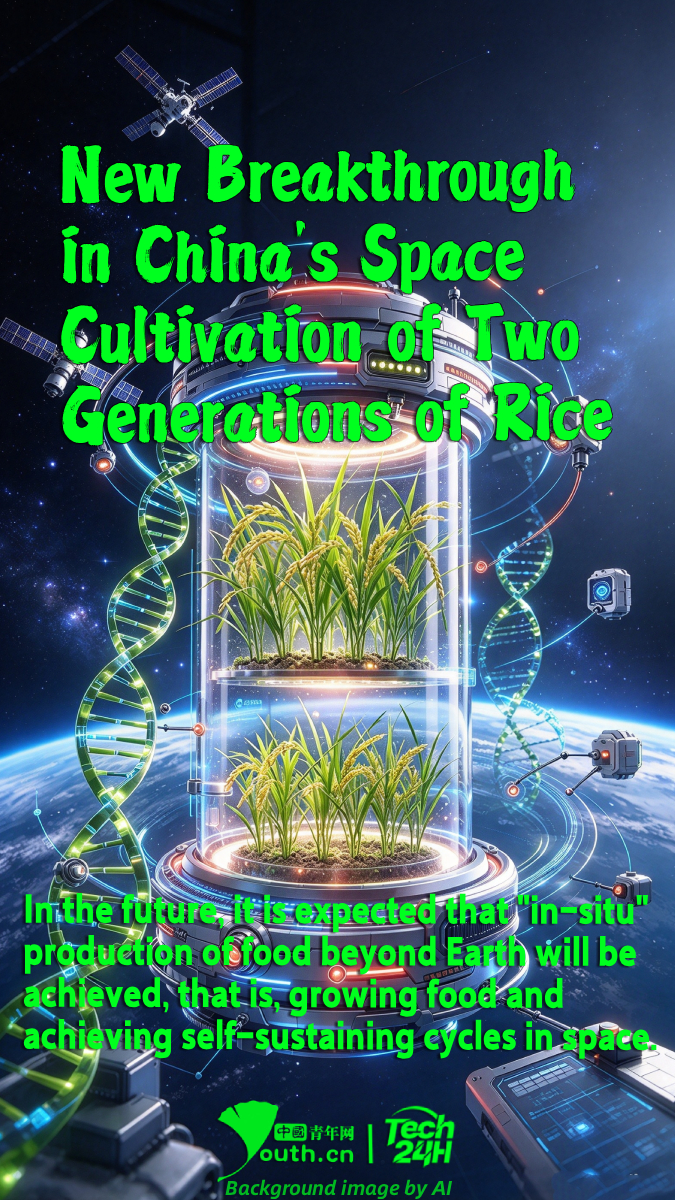
【#Tech24H】The Shenzhou-23 crew has been in orbit for more than four months. They have completed the collection of a new batch of rice experimental samples aboard China’s space station, marking a new breakthrough in China’s first space-based cultivation of two generations of rice. The experiment consists of four units, with six seeds sown in each unit. The four units are divided into two groups for sexual reproduction and two groups for vegetative reproduction, in order to compare the differences in adaptability between these two modes under the space environment. The collected samples will later be brought back to Earth aboard the Shenzhou-23 return capsule, where scientists will conduct comprehensive phenotypic and molecular analyses to elucidate the mechanism by which long-term space microgravity affects the genetic stability of rice. In the future, it is expected that "in-situ" production of food beyond Earth will be achieved, that is, growing food and achieving self-sustaining cycles in space, providing key survival support for humanity's journey into deeper space.[ By Zhang Liyan | Tang Ruohan ]