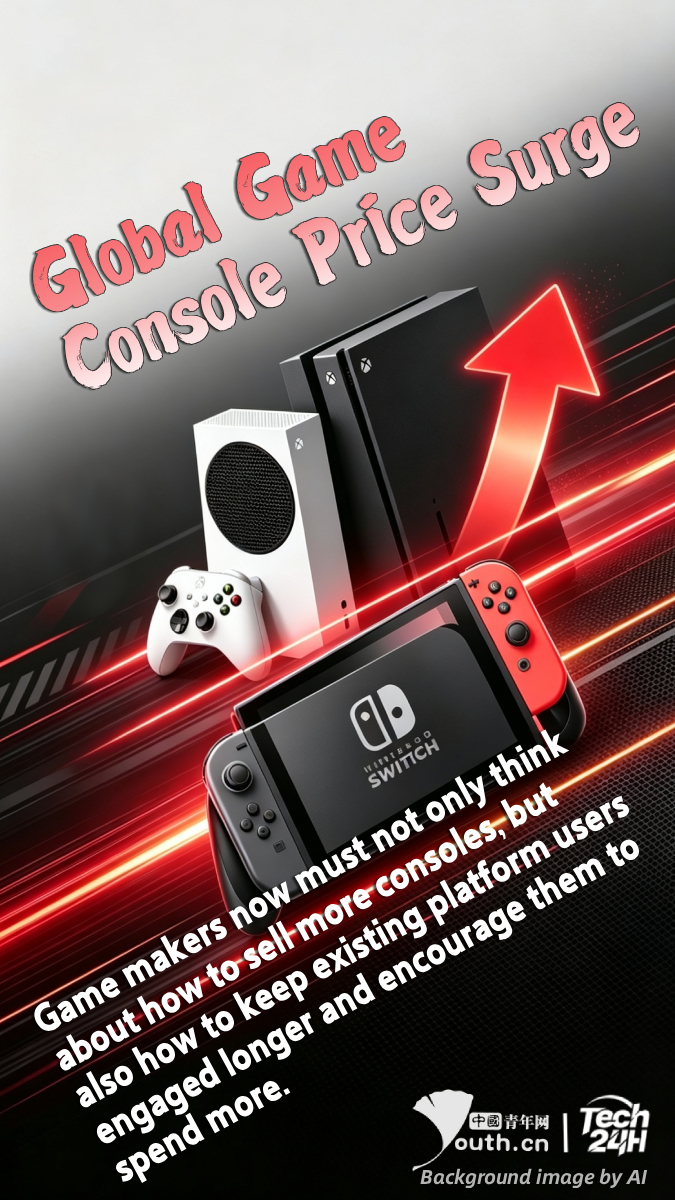
【#Tech24H】Over the past two months, multiple game consoles have been implementing price hikes in succession. First, from August 1, the Xbox Series S 512GB version saw a price increase of 100 dollars, and the 1TB version rose by 150 dollars. Then, from September 1, Nintendo’s Switch 2 saw price increases of 250 Hong Kong dollars in Hong Kong and 50 dollars in the U.S. Nintendo explained that the move was not driven by a desire for higher profits, but by the prohibitively high cost of components such as memory. According to CNBC, a single HBM3E chip sells for roughly 60 to 100 dollars, while a comparable capacity of standard DDR5 memory is worth only $5 to $10. For memory manufacturers, selling chips to AI data centers is naturally far more lucrative than selling to consumer electronics makers. With upstream memory chip prices continuing to climb, midstream module manufacturers have no choice but to follow suit, and the pressure cascades down the supply chain. By the time it reaches Nintendo, Sony, and Microsoft, it all translates into higher overall system costs. The price increases on endconsumer products are merely the tip of the iceberg in this transformation. What will require even greater reassessment is the entire spending pattern of players once they are on the platform. Game makers now must not only think about how to sell more consoles, but also how to keep existing platform users engaged longer and encourage them to spend more.[ By Zhang Liyan | Tang Ruohan ]