
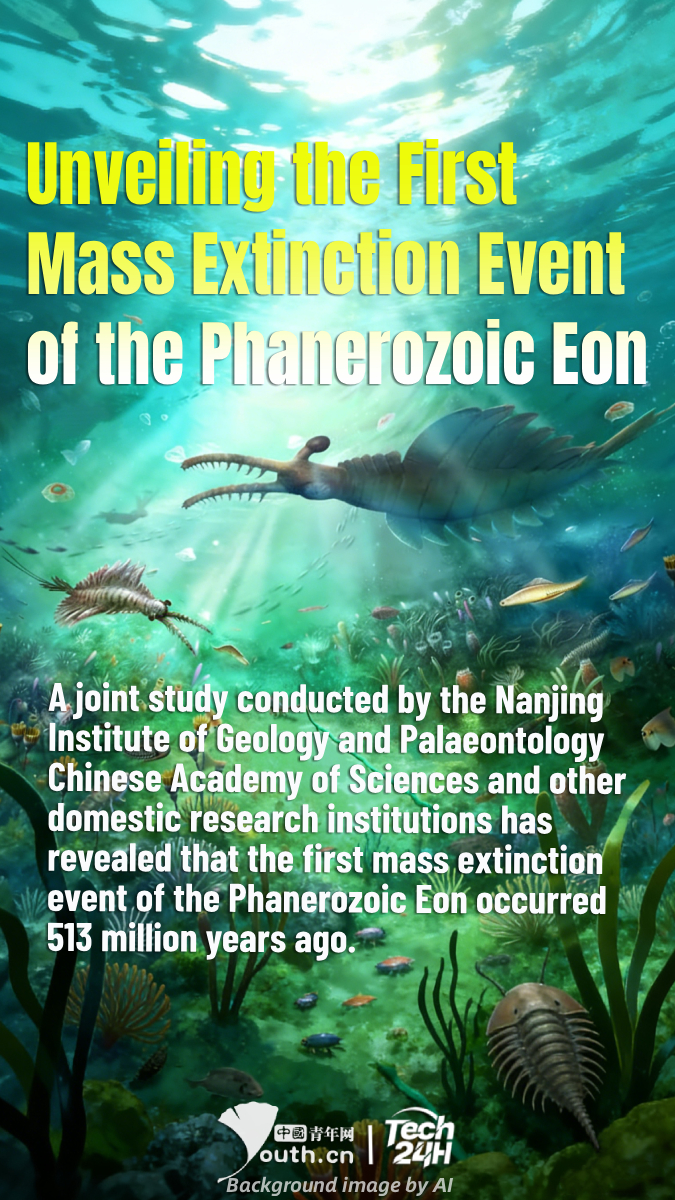
【#Tech24H】A joint study conducted by the Nanjing Institute of Geology and Palaeontology Chinese Academy of Sciences and other domestic research institutions has revealed that the first mass extinction event of the Phanerozoic Eon occurred 513 million years ago. The discovery of the Huayuan biota in Hunan, China, serves as a baton in the evolution of life, bringing about significant changes to global ecosystems. The research team collected over 50,000 fossil specimens and classified and identified 153 animal species, with 59% being newly discovered. Many fossils clearly preserve soft-body biological structures such as digestive, nervous, and respiratory systems, while also revealing a deep-water animal community with complex food webs and biological carbon cycling mechanisms. The discovery of the Huayuan biota fills a global gap in the top-tier soft-body fossil record during the critical period following the Cambrian Explosion, shedding light on the transformation of global marine ecosystems around the time of the first mass extinction event of the Phanerozoic Eon.