
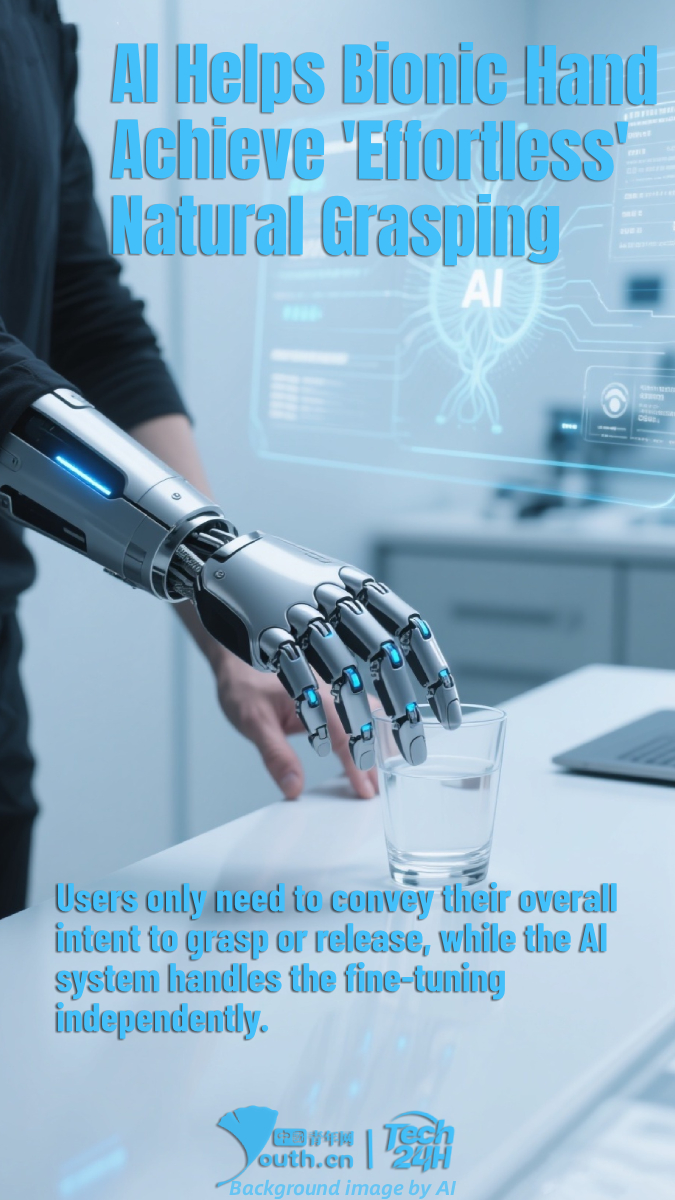
【#Tech24H】A research team from the University of Utah has proposed a novel AI-integrated control method for bionic hands, which is expected to significantly reduce the cognitive burden associated with using arm prostheses. While current high-end bionic hands closely resemble real arms in appearance and actuation, users still need to consciously control the opening, closing, and force exertion of the fingers during operation. This lack of direct control and the heavy operational burden are key reasons why nearly half of users eventually abandon their prostheses. By training an artificial neural network model with sensor data, the research team enabled the fingers to automatically move into the optimal position for a secure grip on objects. Users only need to convey their overall intent to grasp or release, while the AI system handles the fine-tuning independently. This approach minimizes human-machine interference and makes the operation process significantly smoother.