
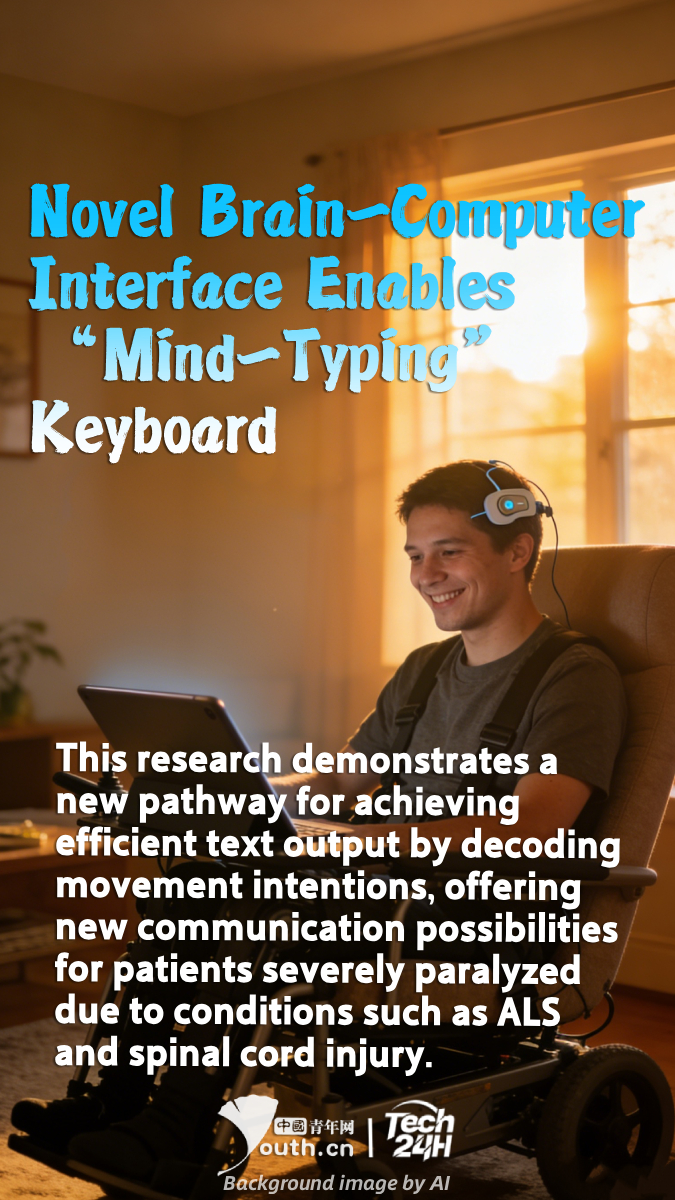
【#Tech24H】A research team from Massachusetts General Hospital in the U.S. implanted a novel brain-computer interface into the motor cortices of two participants with tetraplegia. The participants were asked to attempt finger movements associated with typing on a QWERTY keyboard. Results showed that one participant could type 110 characters (approximately 22 words) per minute, achieving 81% of the typing speed of an able-bodied person using a smartphone, with an error rate of only 1.6%. The other participant could type 47 characters per minute. The system required only about 30 sentences of training to begin operating effectively. This research demonstrates a new pathway for achieving efficient text output by decoding movement intentions, offering new communication possibilities for patients severely paralyzed due to conditions such as ALS and spinal cord injury.